
Architect Headshots: Cost, Examples, Styles & Advice
Architecture Headshots for Architects & Firms in the San Francisco Bay Area

What to Know Before Your Architect Headshot
Architect headshots go on firm websites, proposals, award entries and conference programs, where clients see them with your projects. My studio is in San Francisco, and I photograph architects, designers and firm principals who practice throughout the San Francisco Bay Area. When a firm wants one custom look for the whole team, I also photograph everyone on location at your office.
What Are Architect Headshots?
Architect headshots are professional portraits of architects and the people who lead design work. They're used on firm websites, in project proposals, with award submissions and in conference programs. Most are head-and-shoulders on a simple backdrop, so the photo doesn't compete with drawings and project photography and still works as a small thumbnail.
An architect headshot rarely appears alone. It's usually one photo in a grid on the firm's people page, on the team page of a proposal or in a list of award jurors. Next to professional project photography, a soft or badly lit headshot is the first thing that looks out of place.
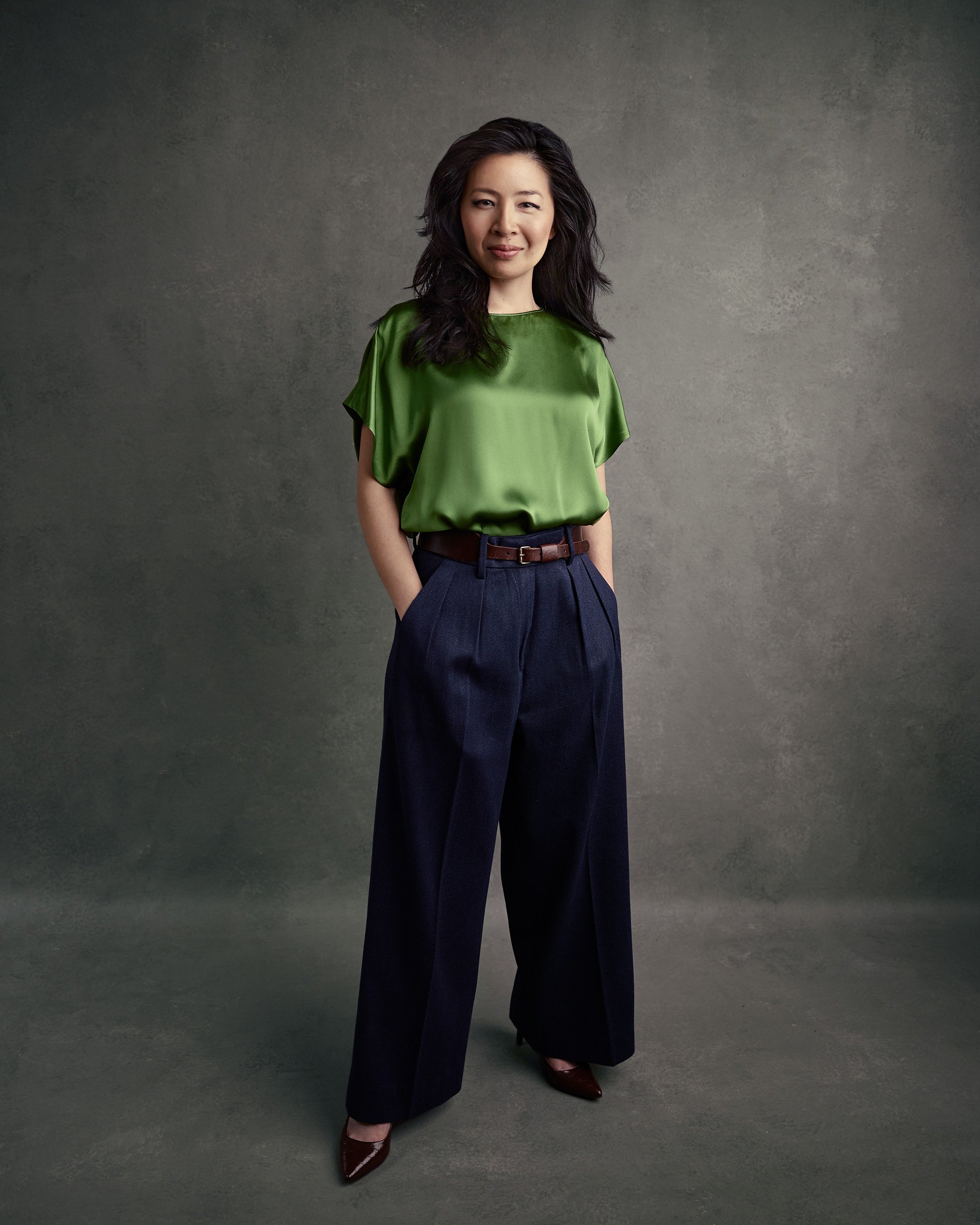
Search for architect portraits and you'll mostly find looser framing: from the waist up, or standing full length, for a monograph, a magazine profile or the about page of a small practice. One session can cover both, a tight crop for the people page and a full-length photo for print.
If your firm already has a standard look for staff photos, a new headshot should match it, so it fits in with the rest of the team in the next proposal. If there's no standard, the look should fit your work: spare and monochrome for a modernist practice, warmer with more texture for a residential studio.
Who Needs Architect Headshots?
Architects at every stage of a career need a current headshot: sole practitioners, firm principals, project architects, designers on a proposal team, and landscape and interior architects. If your name is on a website, a proposal or an award entry, your photo usually is too. A headshot lasts about two to three years, or less if your career changes.
When to update:
Getting licensed: a new title on the firm's people page is a good time for a new photo.
A promotion: firms usually announce new associates and principals with a photo, on the website and on LinkedIn.
Starting a practice: clients are hiring you, and your photo goes on every proposal.
A new firm website: a redesign is the time to replace a photo that's been there since the last one.
A change in how you look: new glasses, shorter hair or a beard that's gone. Here's when to replace a headshot.
My client Jacob Green, a San Francisco architect, needed a new headshot when he opened his own practice. His last photo came from the firm he'd just left, and he said it "looked like a high school yearbook picture." Running his own firm, he wanted a new photo to show he was "professional but approachable."
Firms: a people page filled with photos taken over many years, by different photographers, looks mismatched. Many firms photograph the whole studio at once in one custom look, then add new hires in that same look later. Here's how headshots for architecture firms work.
Why Do Architect Headshots Matter?
Clients hire an architect for a project that can take years, so they're choosing a person as much as a portfolio. Your headshot is often their first look at you: on the firm's people page, in a proposal or on an interview shortlist. A dated or careless photo is a poor first impression for someone whose job is careful work.
Proposals and interviews: on a competitive project, the selection committee often meets the project team as a page of photos and short bios before anyone presents. If one photo is a cropped vacation shot and the rest are studio portraits, that's the one they remember.
Awards and press: award entries, juror bios and magazine features run the architect's photo larger than a website does. At that size, a phone snapshot or over-smoothed skin stands out right away.
How architects see it: Alan Chiang, a licensed architect and senior designer at a global firm, put it this way: "As architects, it is very important for us to represent ourselves well in all graphical ways. It is equivalent to the care we put into our design work." Before his session with me, his headshot was four to five years old and taken without proper lighting or a backdrop.
What Should Architect Headshots Look Like?
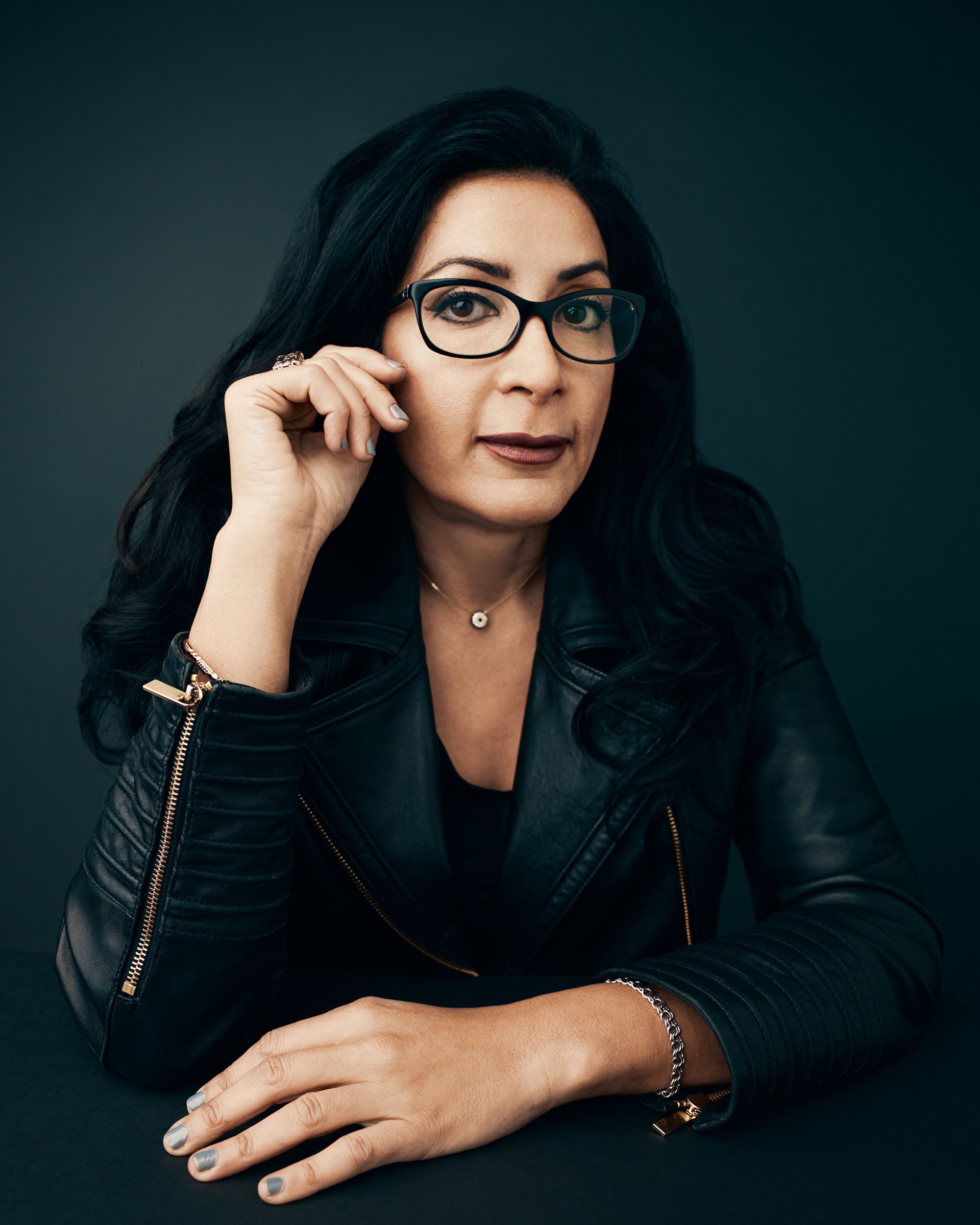
Most architect headshots are head-and-shoulders, with even light that gives the features some shape and a simple backdrop in gray, white or a muted color. Many architects lean toward a minimal look, often in black and white, that matches the way their projects are photographed. The expression should look calm and confident, and still easy to talk to.
Backdrop: matte gray or white works for most firm websites. A textured backdrop that looks like concrete or plaster can match the materials you design with. Keep it subtle so the photo doesn't look themed.
Light: soft light with a little shadow on one side suits most people pages. Principals and architects with a strong modernist style often go further, with higher-contrast, directional light and a darker backdrop.
Black and white: it fits naturally next to monochrome drawings and model photos, and it works on a page where every project photo has a different palette. Both versions can come from the same session. Here's how to choose between color and black and white.
Crop: check how your firm's website shows its people before the session. A grid of small squares needs a tighter frame than a page of tall portraits, and the photo should be framed for the space it will fill.
Not every architect wants gray. Here's the case for a headshot that breaks from the usual.
What Are Good Architect Headshot Poses?
Good architect headshot poses are simple and steady: shoulders turned a little from the camera, chin slightly forward, and hands either out of the frame or doing something natural, like holding your glasses. For a wider portrait, many architects choose a stronger pose, such as arms crossed in side light or one hand resting near the chin.
For the people page: keep it simple, with a straight back and eyes at the camera. If your firm's photos sit in a grid, a pose close to your colleagues' keeps the page consistent.
Arms crossed: a classic in architect portraits, and it looks confident in strong side light. Keep your shoulders down and your grip loose, so it looks relaxed, not defensive.
Hand near the chin: it can look thoughtful, which suits a job built on design review. Keep the fingers relaxed and to one side, so the hand doesn't cover your jaw.
Seated: turned to the side on a stool, with one elbow on your knee, suits a firm's about page or a magazine profile.
Props: leave them out. Rolled drawings, hard hats and scale models date quickly and make the photo look staged.
If posing makes you uneasy, here are some tips for camera-shy clients.
What Should Architects Wear for Headshots?
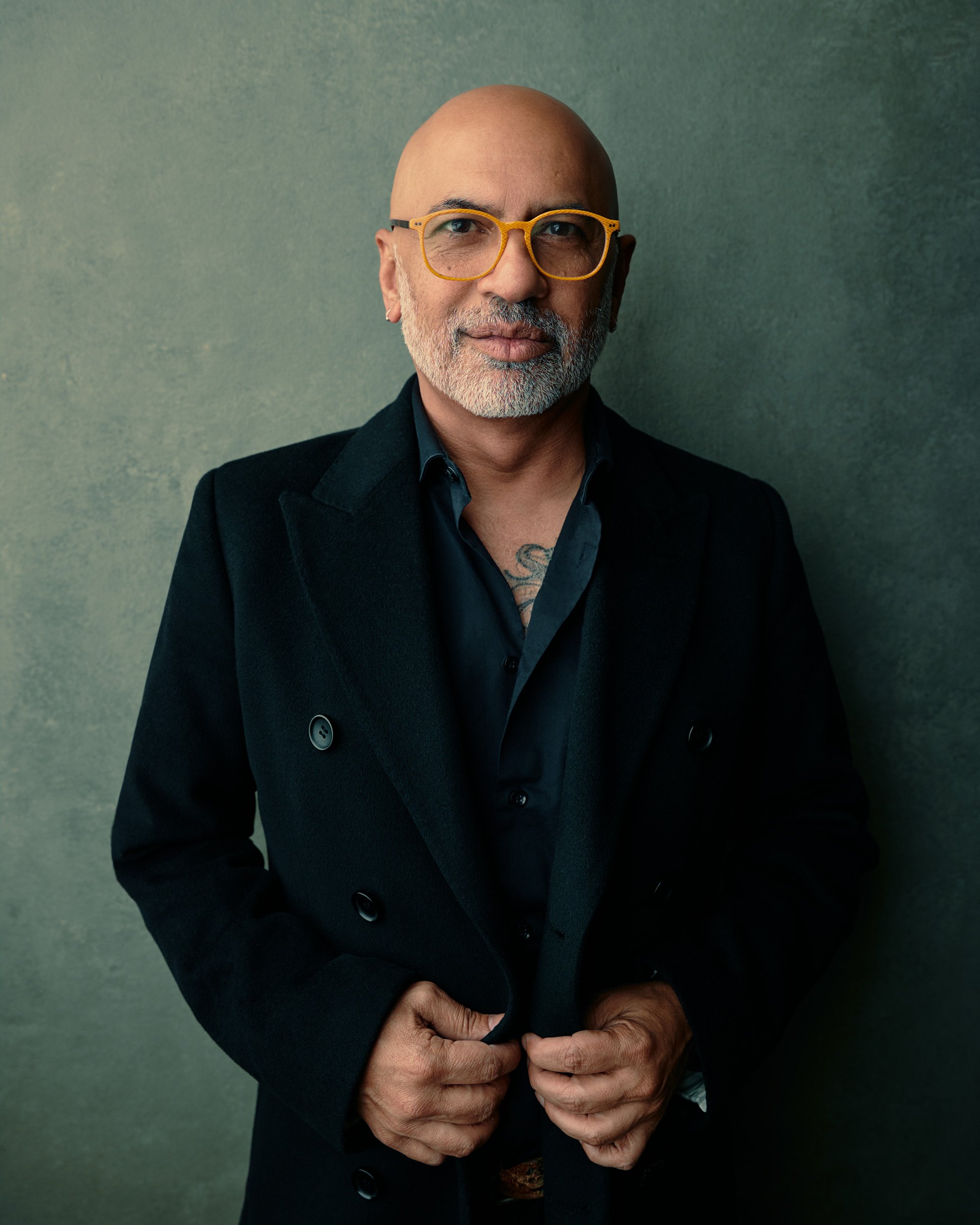
Architects usually look best in their client presentation clothes: a dark jacket, a fine knit, or a simple shirt or dress in charcoal, navy, black or an earth tone. Black is common in architecture, and it stands out on a light backdrop. Wear the glasses you're known for, and keep accessories minimal.
Black: many architects wear black most days, and it's a good choice on a light gray or white backdrop. On a dark backdrop, add a lighter layer or switch to charcoal, so your shoulders don't blend into the background.
Glasses: distinctive frames are part of how many architects are recognized, so wear them. Reflections are handled with the lighting and a small change to the angle of the frames.
Formal or relaxed: a collar or structured jacket looks more formal, which suits a principal pitching a public project. A fine-gauge sweater looks more relaxed and fits a small residential studio.
Texture: fine wool, matte cotton and linen add interest without pulling attention from you. Skip shiny fabrics and small, busy patterns.
One detail: a watch, a lapel pin or a simple necklace adds some personality and still looks professional.
Color: if you usually wear a bold color at the office, bring it as a second look.
For layers, fit and what to bring, see these clothing tips for headshots.
What Should I Look For in an Architect Headshot Photographer?
Look for an architect headshot photographer who mostly photographs people, directs your posture and expression, and does all retouching by hand. Architects should also check that the portfolio shows range and that the photographer can match the firm's existing photos, so future hires fit on the same people page.
People, not projects: many firms ask the photographer who shoots their buildings to take staff photos on the same visit. Architectural photography is about lines and daylight on a structure. Portraits need light set for a person and clear coaching for the expression. Judge them on their portraits, not their project work.
Range: look through their portfolio for different people, lighting and backdrops. If every photo uses the same setup, yours will too.
Lighting: ask how they'll light you. Natural light looks open and soft. Studio lights add contrast and depth, which suits a more editorial portrait.
Retouching: good retouching removes a blemish or a flyaway hair and keeps the texture of your skin. Ask to see before-and-after examples of their retouching.
Matching over time: if the firm needs a consistent look, ask how they'll keep it as people join over the next few years.
Questions to ask:
Is most of your work portraits, or buildings and interiors?
How do you coach an expression that looks natural?
Can you match our firm's current headshots, including for new hires later?
What does retouching include, and when will I get final files?
How Much Do Architect Headshots Cost?
For one architect, a headshot session typically costs $200 to $800+ in the San Francisco Bay Area. The price rises with a longer session, extra outfits or setups, lighting built around you and hand retouching. A firm photographing its whole studio usually gets one quote for the group.
What changes the price:
Two framings: a close crop for your firm's website and a full-length portrait for a monograph or magazine feature need different setups and more time.
Retouched images: ask how many finished, retouched photos the price covers, and what each extra one costs.
Usage: confirm the license covers proposals, award entries and publications, not only your website.
Firm sessions: the quote is based on how many people need photos and whether you come to the studio or the photographer comes to you.
The lowest prices usually come from volume: a newer photographer, one fixed lighting setup, a few minutes per person and retouching done in bulk with a filter. That photo then goes into a proposal next to project photography someone spent days lighting, and the selection committee sees the difference. Here's the hidden cost of a cheap headshot. S72's own rates are listed on the pricing page.
Should I Use AI for My Architect Headshots?
Architects are hired to get every detail of a building right. Generating a headshot from selfies with ChatGPT or an AI headshot tool is fast and cheap, but it suggests you skipped the details when the subject was you. Clients who study drawings for a living tend to notice.
Clients know what a rendering looks like: architects and their clients look at renderings every week. Skin that's too smooth and light with no clear source look like a rendering of a person, not a photo of one.
Clients in other fields notice too. My client Jason Galek, a tax attorney, said he appreciates "the actual skill of a professional photographer in contrast to many who are using AI portraits which invariably look artificial."
It won't match the grid: a generated headshot doesn't share the light, backdrop or crop of your colleagues' photos. On a people page or a proposal team sheet, it's the one that looks wrong.
Glasses and hair give it away: generators often bend the lines of frames and invent strands of hair. For an architect known for a certain pair of glasses, that's the first detail people notice.
The interview comes next: a selection committee that saw your photo in the proposal meets you in person at the interview. If you don't look like the photo, they notice before you start presenting.
Here's the case for a real photographer over an AI app.
Where Can I Get Architect Headshots in San Francisco?
Architects book headshots at S72 Business Portraits, 1097 Howard St. #208 in San Francisco, for photos that work on a firm's people page, a proposal team sheet and an award entry. Individual sessions are up to 30 minutes.
Before we start, I'll look at how your firm's other photos are lit and cropped, so yours fits the page, and ask whether you need a wider portrait too. Then we'll talk through the look together. Bring ideas if you have them, or I'm happy to lead. During the session I coach your pose and expression, and we review the images together on a large monitor so you can see what's working.
Proofs and finals: you get proofs shortly after the session and choose your favorites. Your custom fully retouched images are done by hand, with no filters or AI. Finals are ready in about a week, often in two to three days. Here's how a session works.
Firms: you and I choose one custom look around the firm's brand, and the whole team is photographed in it, in my studio or at your office. New hires can be added later in the same look.
Guarantee: individual sessions come with a money-back guarantee. It's risk-free. If you're not happy with your headshot, you don't pay.
Reviews: 850+ combined 5-star reviews in San Francisco and the Bay Area.
Get in touch with any questions: